


Started in 1980s, Zhengzhou Unique Industrial Equipment Co., Ltd (Unique Group) is already a famous manufacturer & developer of mining equipment like stone crushing & screening equipment and ore processing equipment in China. Our products scope mainly includes cone crusher, jaw crusher, impact crusher, sand making machine, vibrating screen, vibrating feeder, belt conveyor, stationary & mobile stone crushing plant, ball mill, magnetic separator and cement production line etc.
A reliable stone crushing plant is an important part of aggregate production for quarrying, road construction, building projects, and other infrastructure applications. For projects with a target capacity of around 150 tons per hour, the selection and matching of the feeder, primary crusher, secondary crusher, and screening equipment can directly affect production stability and final aggregate quality.
In July 2025, UNIQUEMAC Group completed the installation and commissioning of a 150 TPH stone crushing plant for a customer in Bangladesh. The production line was designed around the customer’s aggregate production requirements and included a GZT-0932 vibrating feeder, PE600×900 jaw crusher, PF1210 impact crusher, and vibrating screen.
Since commissioning, the plant has been operating smoothly, and the customer has provided positive feedback regarding production performance and ease of operation.
Bangladesh has continued to develop its construction and infrastructure sectors, creating demand for construction aggregates and processed stone materials. For quarry operators and aggregate producers, a suitable crushing plant needs to provide stable feeding, effective size reduction, consistent product quality, and relatively straightforward operation and maintenance.
For this project, the customer required a stone crushing plant capable of processing raw stone at a target capacity of approximately 150 tons per hour. The objective was to establish a stable aggregate production system that could support continuous crushing and screening operations.
Instead of selecting individual machines independently, UNIQUEMAC designed the equipment as an integrated crushing and screening system. The configuration allows the material to move through several processing stages, from controlled feeding and primary crushing to secondary crushing and final screening.
This approach is important for a 150 TPH crushing plant because the actual production capacity depends not only on the rated capacity of an individual crusher, but also on how well the complete system is matched.
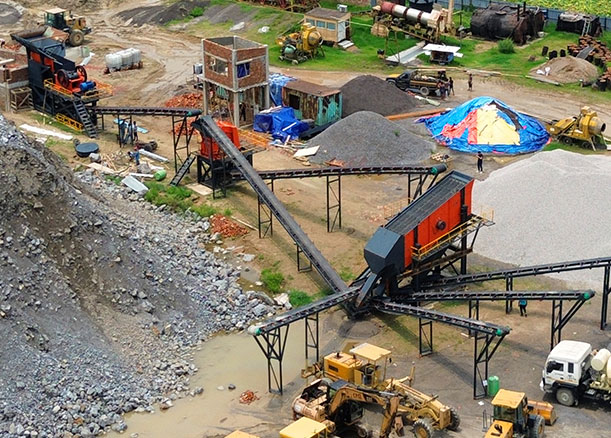
The main objective of the project was to establish a stable aggregate production line that could operate continuously while producing usable construction aggregates. The equipment configuration needed to provide sufficient crushing capacity while keeping the overall process practical for daily operation.
The project requirements included stable and controlled feeding of raw stone, effective primary crushing, secondary crushing for further size reduction, screening of the crushed material into different size fractions, and a production configuration suitable for a target capacity of approximately 150 TPH.
Based on these requirements, UNIQUEMAC supplied a complete crushing and screening configuration consisting of a GZT-0932 vibrating feeder, PE600×900 jaw crusher, PF1210 impact crusher, and vibrating screen.
The complete plant consists of four main processing sections: feeding, primary crushing, secondary crushing, and screening. Each machine performs a specific function within the production process, and the equipment is matched according to the overall crushing capacity and final aggregate requirements.
The GZT-0932 vibrating feeder is installed at the front of the crushing line. Its main function is to receive raw stone from the feeding system and deliver the material to the jaw crusher at a controlled and relatively uniform rate.
Stable feeding is particularly important in a 150 TPH stone crushing plant. If the crusher receives material intermittently, the available crushing capacity may not be fully utilized. On the other hand, excessive or uneven feeding can increase the load on the crusher and affect the stability of the entire production line.
The vibrating feeder therefore acts as the connection between the raw material feeding section and the primary crushing section, helping maintain a continuous material flow into the jaw crusher.
The PE600×900 jaw crusher serves as the primary crusher in this Bangladesh stone crushing plant. As the first crushing stage, the jaw crusher is responsible for reducing relatively large pieces of raw stone into a smaller size suitable for secondary crushing.
The PE600×900 model has a stated capacity range of approximately 50–180 tons per hour, depending on operating conditions and material characteristics. For this project, it was selected as part of a complete system designed around a target capacity of approximately 150 TPH.
The actual production capacity of a jaw crusher can vary depending on factors such as feed size, material hardness, material density, discharge setting, and feeding consistency. Therefore, the rated capacity of the crusher should be evaluated together with the requirements of the complete crushing plant.
After primary crushing, the material enters the PF1210 impact crusher for secondary size reduction. The impact crusher performs the next stage of crushing and further reduces the material before it reaches the screening section.
Impact crushing can be suitable for applications where a relatively high crushing ratio and good particle shape are required. During operation, the incoming material is subjected to impact forces that break it into smaller particles.
For aggregate production, particle shape is an important consideration because the final material may be used in construction and infrastructure applications where aggregate grading and shape can influence its suitability.
In this 150 TPH stone crushing plant, the PF1210 works together with the PE600×900 jaw crusher to complete the primary and secondary crushing stages.
After secondary crushing, the crushed material is transferred to the vibrating screen. The screening stage separates the material according to particle size and allows different aggregate fractions to be collected separately.
Different screen decks and mesh openings can be selected according to the required final aggregate specifications. This makes the screening section an important part of the complete production process rather than simply an auxiliary component.
By separating the crushed material into different size fractions, the vibrating screen helps improve the utilization of the processed stone and provides greater control over the final aggregate products.
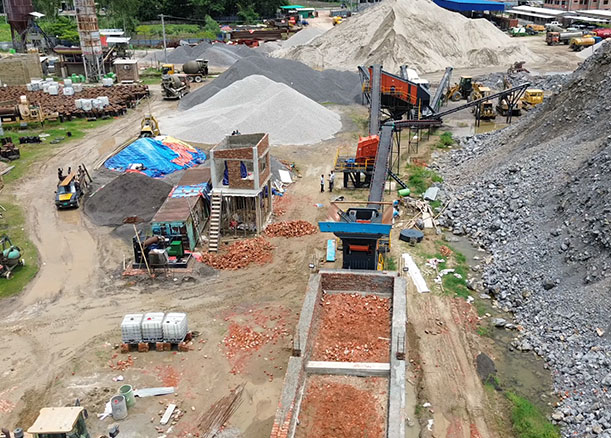
The basic processing flow of this Bangladesh project can be summarized as follows:
Raw Stone → Vibrating Feeder → PE600×900 Jaw Crusher → PF1210 Impact Crusher → Vibrating Screen → Finished Aggregates
The process begins when raw stone is delivered to the vibrating feeder. The feeder regulates the material flow and sends the stone into the PE600×900 jaw crusher.
The jaw crusher performs the first stage of size reduction. Large pieces of stone are crushed into smaller particles before being transferred to the PF1210 impact crusher.
The impact crusher performs the secondary crushing stage and further reduces the material while helping improve the shape of the finished aggregates.
Finally, the crushed material enters the vibrating screen, where it is separated into different particle sizes. Depending on the customer’s requirements, the screening system can be configured to produce several aggregate specifications.
This multi-stage crushing and screening process provides a more controlled approach to aggregate production than relying on a single crusher for all size reduction work.
The combination of a jaw crusher and impact crusher is commonly considered when a project requires effective primary reduction together with controlled secondary crushing. Each crusher performs a different stage of the size-reduction process.
The jaw crusher is positioned at the beginning of the process because it is designed for primary crushing and can handle relatively large feed material. Its main function is to reduce the raw stone to a size that can be processed by the secondary crusher.
The impact crusher then performs secondary crushing and further reduces the material. It can provide a relatively high reduction ratio and favorable particle shape for certain aggregate applications.
Using two crushing stages also makes it possible to distribute the size-reduction work between different machines. Instead of requiring one crusher to perform all of the crushing work, each machine operates within a specific stage of the production process.
For the Bangladesh project, the PE600×900 jaw crusher and PF1210 impact crusher form the core crushing section of the 150 TPH production line.
The suitable material range depends on the specific equipment configuration and the characteristics of the raw material. A crushing plant of this type can be considered for quarry and aggregate applications where raw stone needs to be reduced and screened into usable aggregate sizes.
Before selecting the final equipment configuration, several material and production factors should be evaluated, including raw material type, maximum feed size, material hardness, abrasiveness, moisture content, required final product sizes, target production capacity, and the number of final aggregate fractions.
These factors are important because a plant designed for one type of stone may require different crusher types, wear parts, or screening arrangements when processing another material.
For this reason, a 150 TPH stone crushing plant should be designed according to the actual project conditions rather than simply selecting machines based on nominal capacity.
A crushing plant’s stated capacity should not be interpreted as a guaranteed production rate under every operating condition. The actual output of a 150 TPH crushing plant can be affected by several factors throughout the crushing and screening process.
The hardness, abrasiveness, density, and composition of the raw material can affect crushing efficiency, energy consumption, and wear of the crushing components.
The maximum feed size needs to match the selected primary crusher. Oversized material can reduce operating efficiency and may require additional breaking before entering the crushing plant.
The crusher discharge setting has a direct influence on the size distribution of the crushed material. A smaller discharge setting can produce finer material, but it can also affect throughput and increase the amount of crushing work required.
The vibrating feeder needs to supply material consistently to the primary crusher. Irregular feeding can reduce equipment utilization and make it more difficult to maintain stable production.
The required final aggregate sizes also influence plant performance. Producing finer material generally requires additional crushing and screening work, which may affect the overall throughput of the system.
The number of screen decks, screen openings, material loading, and screening efficiency all influence the final product distribution and overall production performance.
For these reasons, the 150 TPH figure should be understood as the target or design capacity of this project. The actual production rate should be evaluated according to the customer’s raw material, feed conditions, crusher settings, screening requirements, and operating environment.
The Bangladesh stone crushing plant was installed and commissioned in July 2025. According to the project information, the equipment has operated smoothly since commissioning, supported by UNIQUEMAC’s installation and technical service team.
The customer highlighted two important requirements: producing high-quality aggregate and maintaining relatively straightforward equipment operation.
According to the customer’s feedback, the equipment met expectations in terms of production output and ease of operation. This feedback indicates that the selected equipment configuration was suitable for the customer’s production requirements.
For an aggregate producer, equipment performance is not determined only by theoretical capacity. Long-term usability also depends on stable operation, practical maintenance, appropriate equipment selection, and technical support throughout the project lifecycle.
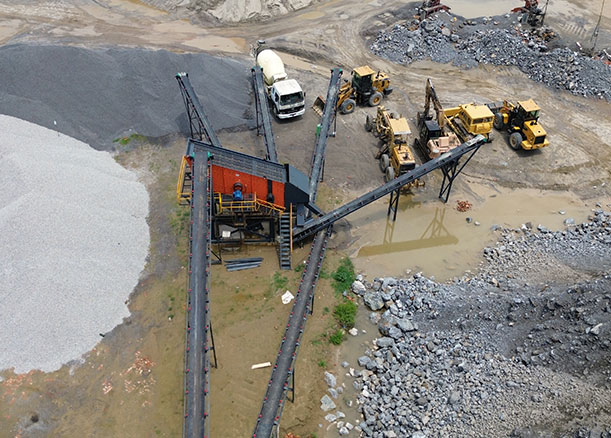
A successful crushing plant project involves more than supplying individual crushers. Equipment selection, process design, installation, commissioning, and after-sales support all contribute to the performance of the complete system.
UNIQUEMAC provides customized crushing plant solutions based on the customer’s project requirements. The equipment configuration can be considered according to raw material characteristics, required capacity, feed size, final product sizes, and application conditions.
Different quarry and aggregate projects have different requirements. Material characteristics, target capacity, final aggregate sizes, and site conditions all influence equipment selection.
For this reason, UNIQUEMAC can configure crushing and screening equipment according to the specific project conditions instead of applying exactly the same configuration to every customer.
Technical support is provided throughout different stages of the project, including equipment selection, plant implementation, installation, commissioning, and maintenance.
For customers investing in a complete stone crushing plant, technical support can help simplify the process from initial equipment selection through installation and production.
According to the company information provided for this project, UNIQUEMAC has more than 40 years of experience in supplying crushing equipment and related solutions to customers in different markets.
A 150 TPH stone crushing plant is a complete crushing and screening system designed around a target processing capacity of approximately 150 tons of raw material per hour. The actual output depends on material properties, feed size, final product requirements, equipment settings, and operating conditions.
The project includes a GZT-0932 vibrating feeder, PE600×900 jaw crusher, PF1210 impact crusher, and vibrating screen. These machines form the main feeding, primary crushing, secondary crushing, and screening sections of the production line.
A jaw crusher is commonly used for primary crushing because it can handle relatively large feed material and reduce it to a smaller size for subsequent crushing stages.
The impact crusher performs secondary crushing and can provide a relatively high reduction ratio and good particle shape, making it suitable for certain aggregate production applications.
Yes. The vibrating screen separates the crushed material according to particle size. The final screening configuration can be selected according to the required aggregate specifications and the customer’s application.
Not necessarily. The 150 TPH figure represents the target or design capacity of this project. Actual production depends on raw material characteristics, feed size, crusher settings, screening conditions, feeding stability, and other operating factors.
If you are planning a quarry, aggregate production, road construction, or mining project and are looking for a 150 TPH stone crushing plant, the equipment should be selected according to your actual material and final product requirements.
UNIQUEMAC can provide a customized crushing and screening solution based on your raw material, target capacity, maximum feed size, desired aggregate sizes, and project conditions.
Send us your project information to discuss the appropriate 150 TPH crushing plant configuration for your application.