

Excavator
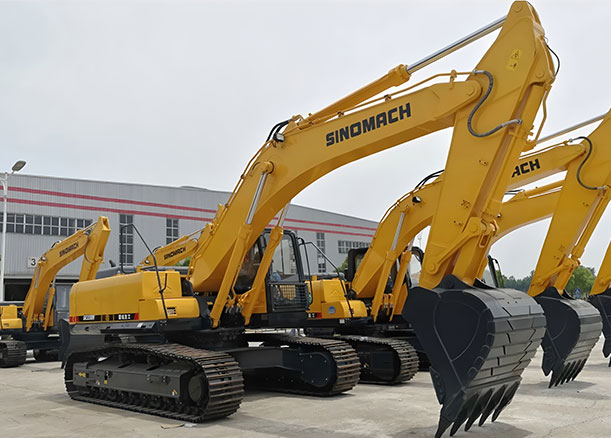
An excavator is a heavy construction machine designed for digging, loading, lifting, and moving materials such as soil, rock, sand, and debris. It typically consists of a cab (where the operator sits), a rotating platform (upper structure), a boom (long arm), an arm (connecting the boom to the bucket), and a bucket (the digging tool at the end).
Introduction: Contact Us Now
An excavator is a heavy construction machine designed for digging, loading, lifting, and moving materials such as soil, rock, sand, and debris. It typically consists of a cab (where the operator sits), a rotating platform (upper structure), a boom (long arm), an arm (connecting the boom to the bucket), and a bucket (the digging tool at the end).
Excavators are widely used in various industries, including construction, mining, road building, demolition, and landscaping. They can be equipped with different attachments (e.g., breakers, grapples, augers) to perform specialized tasks beyond digging, such as breaking rocks, grabbing materials, or drilling holes.
There are several types of excavators, such as crawler excavators (with tracks for stability on rough terrain), wheeled excavators (for faster movement on paved surfaces), and mini excavators (for small-scale projects or tight spaces).
Features and principle: Contact Us Now
Excavator Parameter Table
| No. | Model | Emission Standard | Operating Weight (Kg) | Bucket Capacity | Standard Configuration | Engine |
|---|---|---|---|---|---|---|
| 1 | GE150C | National II | 13890 | 0.6 m³ | Standard Configuration | Cummins |
| 3 | ZG3210-9D | 20750 | 1.0 m³ | Standard Configuration | Cummins | |
| 5 | ZG3225LC-9C | 22000 | 1.1/1.3 m³ | Standard Configuration | Cummins | |
| 7 | GE330D | 31380 | 1.6 m³ | Standard Configuration | Cummins | |
| 9 | GE365D | 34600 | 1.7 m³ | Standard Configuration | Cummins | |
| 11 | GE380H | 37300 | 1.8 m³ | Standard Configuration | Cummins | |
| 12 | GE520H | 50460 | 3.2 m³ | Standard Configuration | Cummins |

Parameters: Contact Us Now
Large Excavator Application Scenarios
Full-Scenario Application Summary of Large Excavators (Suitable for Engineering and Overseas Sales) As core equipment in construction projects, large excavators mainly perform excavation, loading, breaking, leveling, and lifting tasks, earning them the title of the "heavy-duty workhorse" in engineering construction. With their strong power and high efficiency, they are widely applied in various large-scale infrastructure, mining, and municipal projects. Construction and Infrastructure Engineering (Core Scenario) 1.Foundation Excavation: Excavate foundation pits and trenches for high-rise buildings, bridges, and industrial plants, including earthwork excavation, slope shaping, and bottom leveling, to meet design standards. 2.Earthwork Handling: Conduct large-scale earthwork excavation, transfer, and backfilling for projects like urban renewal, industrial parks, and new area development to enhance construction efficiency. 3.Bridge and Road Construction: Excavate foundations for bridge piers and abutments, dig road subgrades, and clear construction sites to lay the groundwork for subsequent construction work. 4.Tunnel Construction: Excavate tunnel portals, clean tunnel inner walls, and handle muck, making it suitable for highway, railway, and water conservancy tunnel projects. Mining and Quarry Engineering
- Excavate mineral resources such as coal, iron ore, and limestone in open-pit mines, and load the ore onto dump trucks for transportation.
- Shape quarry benches, clean mining faces, and handle waste rock to ensure safe and efficient mining operations.
- Excavate and arrange mining access roads and unloading platforms to ensure smooth transportation within the mining area.
- Excavate and dredge rivers, lakes, and reservoirs to improve water flow capacity and prevent flooding.
- Construct dams, dikes, and sluices, including foundation excavation, earthwork backfilling, and slope trimming.
- Dredge water channels and port basins to ensure smooth navigation for ships and the normal operation of water conservancy facilities.
- Demolish old buildings, houses, and outdated facilities in urban renewal and reconstruction projects, offering high efficiency and strong operability.
- Excavate trenches and lay urban underground pipelines (water supply, drainage, gas, and power pipelines), then backfill after construction.
- Construct and renovate urban green spaces, squares, and scenic spots, including earthwork shaping and landscape construction.
- Load and unload bulk cargo (grain, coal, ore) and containers at ports and terminals, replacing manual labor and boosting loading and unloading efficiency.
- Dredge port berths and channels, and clean port yards to ensure the normal operation of port logistics.
- Construct and maintain port terminals, including foundation excavation and structural backfilling.
- Disaster Relief: Conduct rescue operations during floods, earthquakes, and landslides, such as clearing obstacles, rescuing trapped people, and dredging blocked roads.
- Breaking Operations: Equipped with a hydraulic breaker to break hard rocks, concrete structures, and old pavements in construction and renovation projects.
- Lifting Operations: Lift heavy materials (steel, equipment) at construction sites with the help of lifting accessories to meet on-site construction needs.
Contact engineer Now: Contact Us Now
hot products Contact Us Now
nodata